Get found
People searching for what you sell need to land on you, whether they ask Google, Maps or an AI assistant.
- Local SEO
- Google Maps
- Content
- AI visibility
Website, social, video, search and practical AI, run every month by one team you can actually call. Priced for owners who have a business to run: from $350 a month, month to month, anywhere in the United States.
Your business doesn't need more random marketing. It needs a system.
A new website one year. A social push the next. Somebody's cousin ran ads for a while. Each piece was fine on its own and none of them talked to each other, so nobody could tell you which one brought in a customer. That's the gap Thinglet closes: one team, one plan, every month.
It runs five stages, in order, every month: get found, get trusted, get the lead, get the customer, get them back. Every service we sell maps to one of those five. If a job doesn't move a customer from one stage to the next, we don't sell it.
People searching for what you sell need to land on you, whether they ask Google, Maps or an AI assistant.
Being found is worth nothing if the site, the reviews or the photos make a buyer hesitate for even a second.
Turning a visitor into a call, a form or a booking, then tracking which channel actually produced it.
Speed closes. The business that answers first usually wins the job, and most small businesses answer hours late.
The cheapest customer you will ever get is one who already paid you once and liked it.
Because one team owns the outcome, and that team has run businesses of its own. A big agency hands you a channel specialist and a portal. A freelancer disappears when the next gig lands. Here the same people build the site, run the server, write the posts, film the video, place the ads and read the numbers with you each month.
No pointing between the web guy, the social person and the ad rep. One plan, one number to call, one monthly conversation about what actually moved.
Most agencies stop where the code starts. We build the site, host it on servers we run, wire the automation and market the result, so nothing falls into the gap between vendors.
Patrick Albert served in the U.S. Navy, owned restaurants for twenty years, has built on the internet since 1999 and has met a payroll. The advice comes from operating, not from a template.
$350, $500 or $1,250 a month, all month to month. A single in-house marketing hire costs more than our biggest plan before benefits.
Our home office is in Palm Desert, California. Everything we do for a client down the street we do the same way for one in Peoria: the site, the posts, the video and the reports all ship over the wire.
Pat's books on practical AI and small-business systems are on Amazon. What we recommend to clients is what we published under our own name, so you can check our thinking before you spend a dollar. See the books.
The same work most agencies list as thirty services, grouped by the problem it solves. If you would rather see it by industry, start here.
Every plan is fully managed: we write it, design it, film it, schedule it and report on it. Move up or down any month. Cancel any month, and if your plan included a website, it stays yours.
Stay active and top of mind on the two feeds that matter most.
Facebook + Instagram
Three platforms, weekly video, and a website we build or take over and keep running.
3 platforms + website included
Your outsourced marketing department. Every platform, every week, ads included.
Any platforms + up to 3 websites
We build the software we use for clients, then put it where any small business can get at it. Three are free, the rest cost less than lunch. Every one of them is a Thinglet product, so it looks and behaves like the rest of the family.

A done-for-you small-business website, $29.99/mo, cancel within 30 days for a full refund. Then hosted and kept current for a flat monthly fee. The do-it-yourself step below our plans.
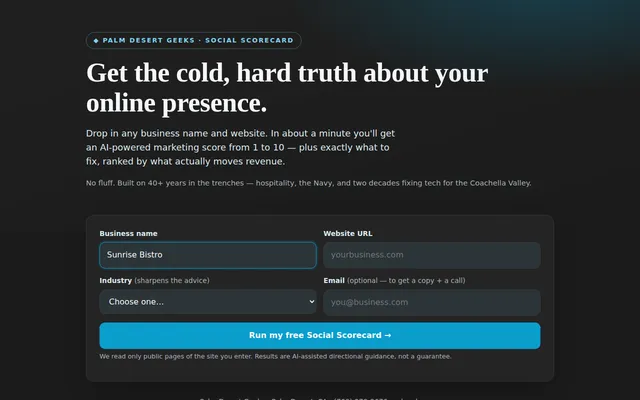
Enter a business name and website, get a 1 to 10 marketing score and a ranked fix list in about a minute. Reads only public pages. Keep the report either way.
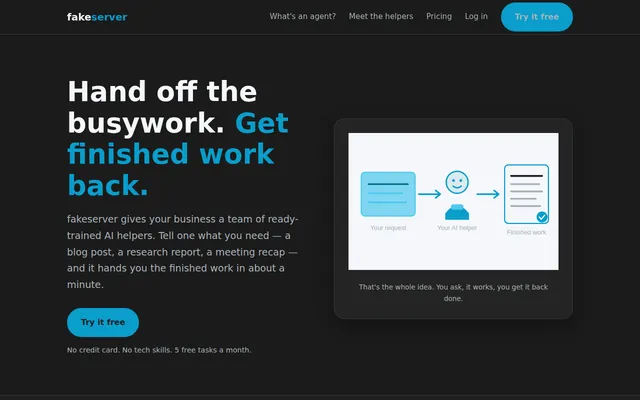
Ready-trained AI helpers that hand you finished work: blog posts, research reports, meeting recaps, review replies. Tell one what you need and get it back in about a minute.
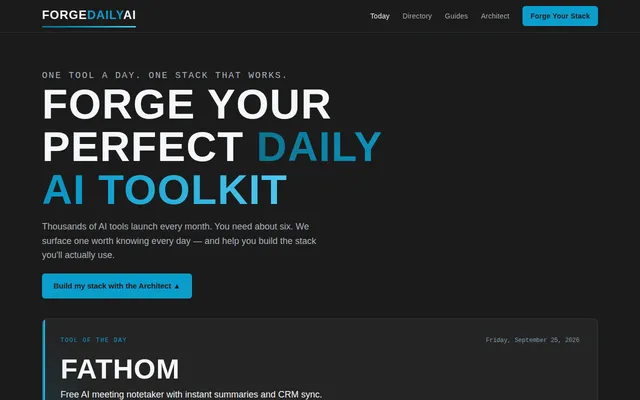
One AI tool worth knowing every day, a directory of 120-plus sorted by the job you're trying to do, and a Stack Architect that builds your shortlist from five questions.
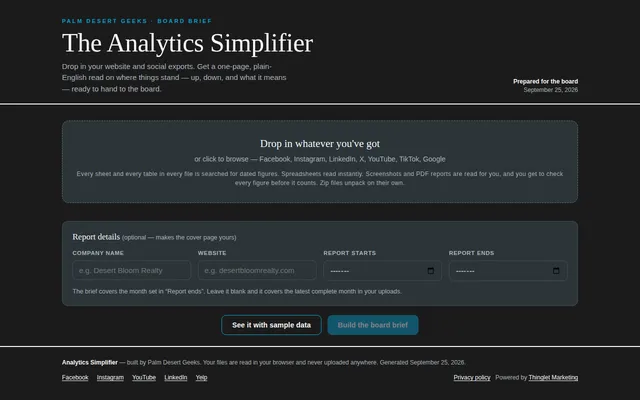
Drop in the exports you already get from Google, Facebook and Instagram. Get back a one-page, plain-English board brief: what went up, what went down, what to do about it.

An outside look at how exposed your business is: website, email, accounts and the things an attacker checks first, written up in plain English with the fixes in order.
Patrick Albert writes the practical books on AI that other agencies quote. The Implementation Files follows five composite small businesses over two years as they put AI to work where it earns its keep and leave it out where it doesn't. Read a chapter before you hire us. That's the point.
 Book 1
Where AI actually fits in a small business, and where it does not. Ten chapters, ten tables, five businesses, no hype.
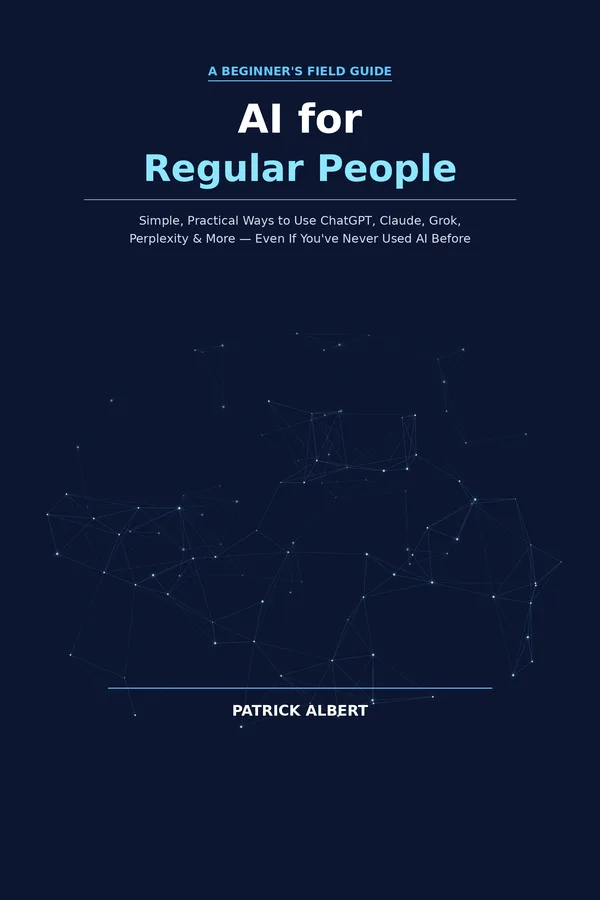 For everyone
Simple, practical ways to use ChatGPT, Claude, Grok, Perplexity and more, even if you've never used AI before. A beginner's field guide, ten short chapters.
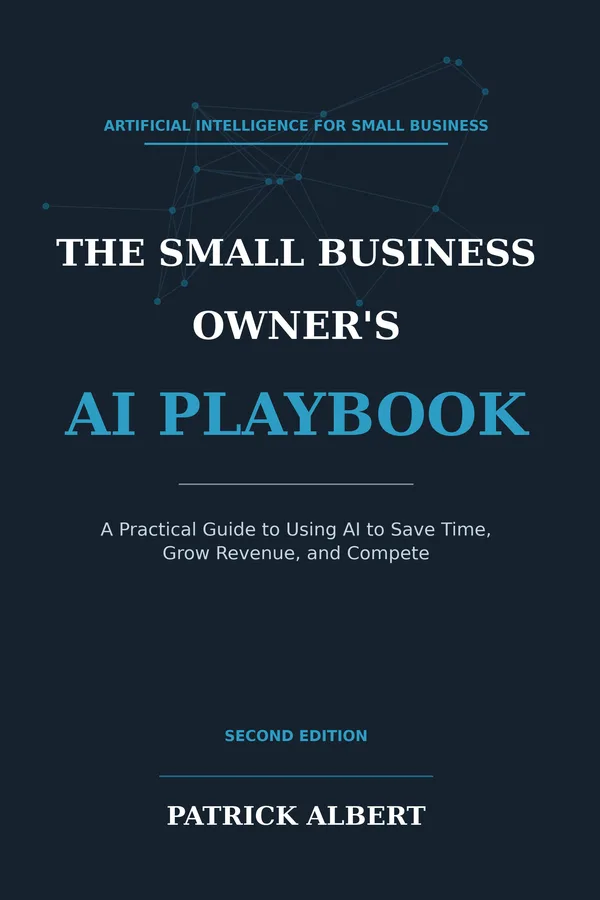 Standalone
Twenty chapters of plain-English AI for people who run a business, not a lab. The book Thinglet started with.
For speed and volume, not for strategy. Most of your competitors still haven't done it: the U.S. Census Bureau's Business Trends and Outlook Survey found overall business AI use running at 17 to 20 percent between December 2025 and May 2026, and under 20 percent among firms with four or fewer employees. Every plan we sell has AI built into the workflow, and the AI products themselves live with our sister brand, Thinglet A.I.
A form filled at 9pm gets an intelligent reply immediately instead of a callback two days later, once the customer has already booked someone else.
Real inquiries separated from spam and tire-kickers, tagged by urgency and job type before anyone on your side opens them.
One substantial piece a week turned into an article, a video, three shorts, social posts and a newsletter, then edited by a human before it goes out.
When a customer asks an AI assistant for a recommendation, the businesses with clear, structured, useful pages are the ones it names. That work sits inside every plan.
An AI receptionist that takes the call at 7am or on a Sunday, books the appointment, and texts you the summary, so a ringing phone no longer means a lost job.
The Google, Facebook and Instagram exports you already get, turned into a one-page brief in plain English. What went up, what went down, what to do about it.
We've marketed Palm Springs restaurants, Indio contractors and Rancho Mirage medical practices since 2011, and we know each of these cities block by block. If you're here, start with your city. If you're anywhere else in the country, start with the Growth Score; the work ships the same way.
Reviewed and updated . Budget figures cited from the Gartner CMO Spend Survey and The CMO Survey.
 Get found
Customers are starting to ask ChatGPT, Perplexity and Google's AI for recommendations instead of scrolling results. What gets a small business named in that answer, and what gets it skipped.
 Get them back
A weekly email to past customers is the highest-return marketing a small business can do, and most quit after three because they run out of ideas. Here is a year of them.
 Get the customer
An AI receptionist answers every call, books the appointment and texts you the summary. It also has limits. Here is the honest version, from someone who runs one.
The Growth Score checks your website live, then looks at your Google presence, reputation, content, advertising and follow-up. Free, no obligation, and you get the results on the spot.
Get your free Growth Score